Executive Summary
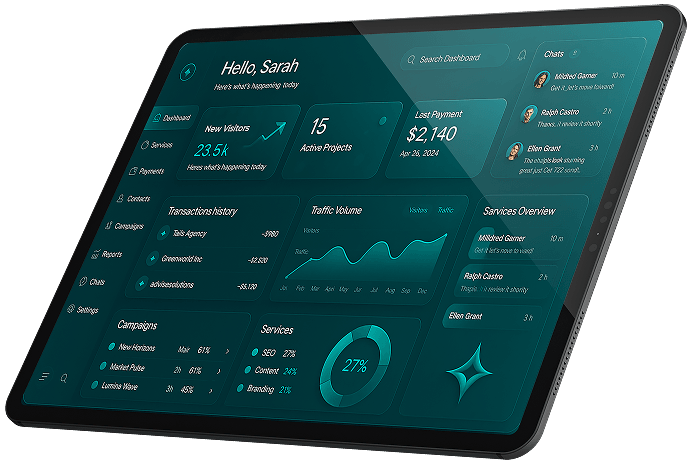
Enterprises face rising cost-to-serve, siloed HR and CRM processes, and demand for real-time operational insight. Closing the gap requires transforming workflows, upgrading reporting to prescriptive operations intelligence, and tightening governance to execution. This briefing lays out a pragmatic sequence: inventory and rationalize HR and CRM workflows; introduce modular workflow engines and event-driven reporting; align KPIs to outcomes; and operationalize continuous improvement. A phased rollout that prioritizes high-volume HR and CRM touchpoints, enforces cross-functional ownership, and establishes a fortnightly reporting cadence accelerates value capture and reduces operational risk. Expect measurable cost reduction, faster decisions, and greater scalability, with disciplined change management and clear stewardship.
Techstello Insights
Strategic shift: converting fragmented processes into operational leverage
Enterprises increasingly recognize that operational efficiency is not an IT project; it is a market-facing capability. Pressure from tighter margins and higher customer expectations has exposed seams between HR operations, CRM operations, and core workflow systems. Those seams create hidden cycle times, manual rework, and reporting blind spots that amplify cost-to-serve. The strategic response must treat workflows and reporting as interconnected systems: optimize touchpoints where HR processes intersect CRM-driven customer journeys, and refocus reporting to influence decisions rather than merely record activity.
Transformation requires reprioritizing investments away from point optimizations and toward a systems-level architecture. That architecture should support modular workflow engines, event-driven data capture, and reporting that maps directly to operational outcomes. The strategic objective is to shorten decision loops: reduce handoffs, raise automation thresholds for repeatable tasks, and ensure every operational metric links to a clear economic or experience outcome. Doing so shifts optimization from tactical cost-cutting into enduring competitive advantage.
Operational implementation realities
Implementation complexity is the primary risk. HR and CRM systems often run on different cadences, with mismatched data models and legacy integrations. A practical path begins with a mapped inventory: catalog processes by volume, latency, and manual touchpoints. Next, extract high-value flows for stabilization through a modular workflow engine that supports orchestration and human-in-the-loop exceptions. Avoid wholesale rip-and-replace; adopt incremental adapters that convert existing systems into event publishers and consumers.
Governance and execution are equally critical. Establish cross-functional stewardship that pairs HR, CRM, IT, and process owners with a small central operations team responsible for the workflow backlog and measurement cadence. Define outcome-based KPIs tied to cost, cycle time, and customer or employee experience. Operational reporting must be embedded into weekly decision forums, with a clear escalation path for variance resolution. Scalability follows from disciplined change control, reusable workflow components, and automated data quality checks.
Enterprise implications and future readiness
When executed correctly, optimized workflows and prescriptive reporting deliver three enterprise-level outcomes: sustained cost reduction, accelerated decision velocity, and improved resilience. Cost reductions come from eliminated rework and reduced manual handling; decision velocity improves as reporting becomes action-oriented; resilience grows through modular workflows that isolate failures and enable rapid remediation. These outcomes change how organizations plan capacity, price services, and manage talent allocation across HR and CRM functions.
Looking forward, the capability stack must evolve: adopt event-driven reporting with real-time operational metrics, extend workflow libraries to cover common HR and CRM patterns, and invest in low-friction automation for routine exceptions. Build a continuous improvement loop where reporting surfaces opportunities, workflows are updated, and the impact is measured against outcome KPIs. This architecture converts episodic transformation into an operational competency that sustains scale and supports new business models.
Key Takeaways
Treat HR, CRM, workflows, and reporting as an integrated operational system, not discrete projects.
Prioritize modular workflow engines and event-driven reporting to shorten decision cycles and reduce manual rework.
Enforce cross-functional governance and outcome-based KPIs with a regular reporting cadence to capture value.
Scale through reusable components, disciplined change control, and embedding reporting into operational decisions.
Techstello Angle
Techstello frames optimization as a systems problem: unify HR and CRM touchpoints via modular workflow engines, embed event-driven reporting, and operationalize outcomes through governance, phased rollouts, and reusable components.