Executive Summary
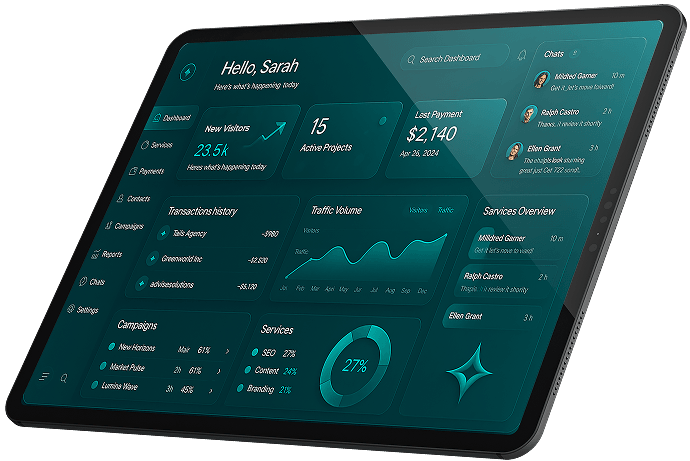
Marketing leaders face a new imperative: integrate SEO, social media and campaign analytics into a single acquisition engine that scales across global channels. Fragmented systems inflate cost‑per‑acquisition, slow decision loops and blind teams to cross‑channel attribution and cohort performance. Strategic integration requires platform consolidation, shared identity graphs, deterministic audience mapping and governance that preserves speed while enforcing compliance. Execution demands coordinated roadmaps across martech, data engineering and product, modular data pipelines, experiment frameworks and a shifting budget model toward measurable outcomes. Treated as an operational transformation, integrated campaign intelligence reduces waste, accelerates conversion velocity and converts visibility into repeatable, measurable enterprise growth.
Techstello Insights
Strategic shift in acquisition unified SEO and social intelligence
Enterprises are moving beyond channel-centric plans to acquisition systems that treat SEO, organic social and paid campaigns as interconnected levers. Organic search drives discovery, social accelerates engagement and paid media amplifies reach; when measurement is fragmented, each lever is optimized in isolation and overall efficiency declines. The strategic question is not which channel to prioritize but how to architect a single source of truth for audience position, intent signals and conversion pathways.
This shift changes commercial KPIs. Metrics move from last-click conversions to conversion velocity, cohort retention and incremental revenue per audience segment. That requires deterministic audience mapping across sessions and devices, and an analytics layer that reconciles crawl and index signals (SEO) with content engagement metrics (social) and paid attribution. Firms that adopt unified acquisition thinking can reallocate budget toward sustained LTV improvements rather than short-term channel wins.
Operational implementation realities
Implementation exposes technical and governance complexity. Identity resolution and consent management are prerequisites: without a robust identity graph, cross-channel joins will be probabilistic and results noisy. Data engineers must build modular ingestion pipelines that normalize click, impression and engagement data into consistent event schemas. Latency, sampling and API rate limits from platforms all affect near-real-time decisioning and require fallback strategies for attribution and bidding.
Operational cadence must span tag governance, content ops and experiment management. Tag hygiene, canonical URL strategies and schema markup affect organic performance; creative variants and posting cadence drive social signals; paid creative testing impacts paid ROI. Governance must define ownership across martech, product and agency partners, with budgets tied to measurable experiments rather than channel line-items. Security, privacy and compliance checkpoints should be embedded in deployment pipelines to avoid costly rollbacks.
Enterprise implications and future readiness
When integrated, campaign intelligence becomes a competitive lever that reduces waste and raises acquisition predictability. Organizations that converge measurement can shift from reactive optimization to proactive demand orchestration: anticipating intent via search trends, seeding audiences through owned social channels and amplifying with targeted paid spend. The long-term prize is a repeatable acquisition engine that turns visibility into predictable cohorts and measurable LTV growth.
Realizing that prize requires investment in skills, tooling and operating model. Expect a transition period where centralized analytics teams provide the measurement fabric while distributed marketing units retain executional ownership. Over time, build internal interfaces—dashboards, APIs and playbooks—that democratize insights and automate routine allocation decisions. The objective is not centralization for its own sake but scalable orchestration that preserves speed, accountability and measurable ROI.
Key Takeaways
- Unify SEO, social and paid data into a single acquisition dataset to reduce CAC and improve cohort clarity.
- Prioritize identity resolution, consent and event normalization before advanced attribution models.
- Align governance across martech, data engineering and product to operationalize experiments and budget shifts.
- Design the operating model to scale insights: central measurement, distributed execution, automated allocation.
Techstello Angle
Techstello treats integrated promotions as an operational transformation: we align martech and data systems, implement modular pipelines and embed governance to convert cross‑channel visibility into repeatable acquisition engines and measurable ROI.